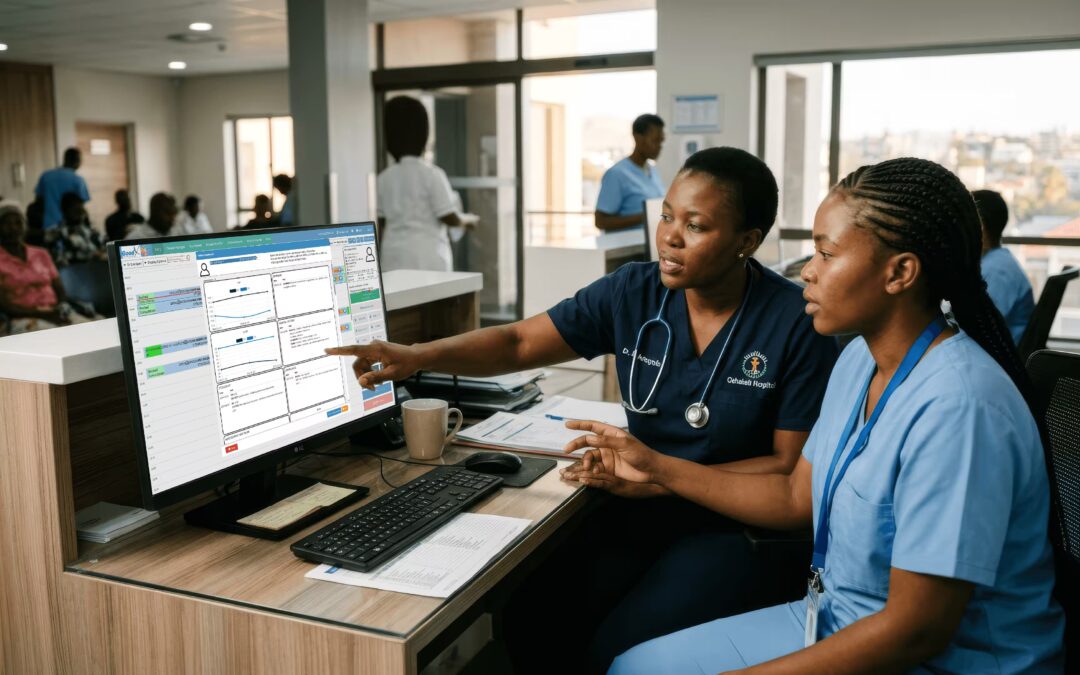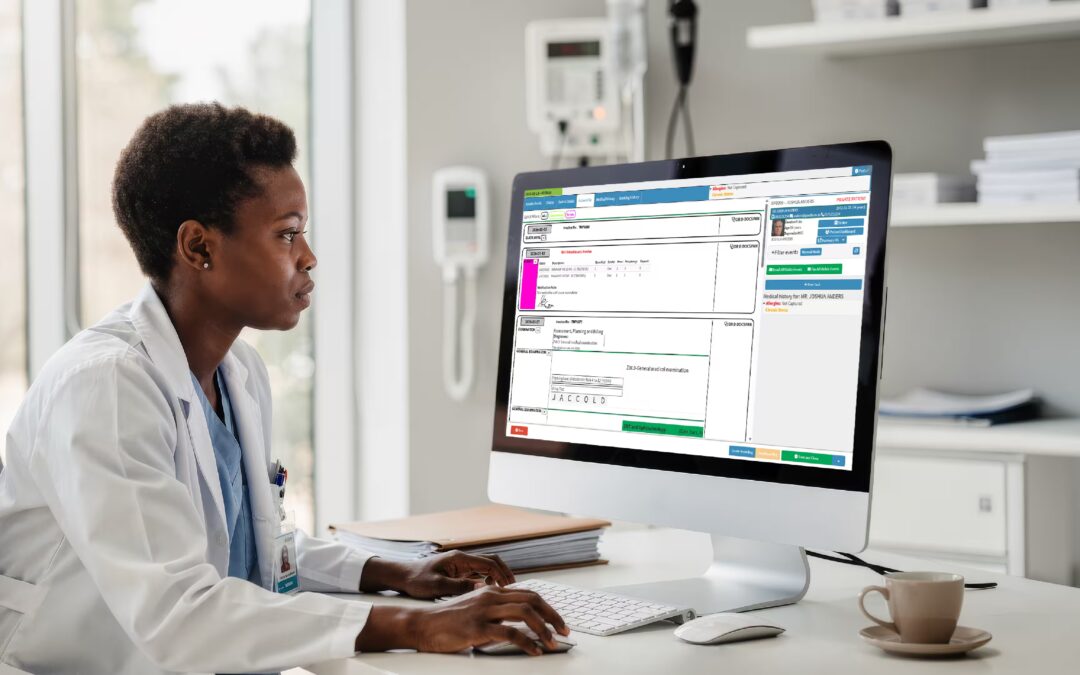
Across Namibia, practices are slowly trading their paper files for screens. The reasons are practical. Records get lost, handwriting is hard to read, and a growing patient base is difficult to manage with folders alone. An EMR offers a way out of that daily struggle.
EMR stands for electronic medical record. In plain terms it is a secure digital chart that holds a patient’s history, medication, results and notes in one place. Instead of searching a cabinet, your team finds the right information in moments.
This article explains the meaning of EMR, how it shapes everyday clinical work, and what to expect when records move into a hospital or across several sites. The goal is to give Namibian practitioners a clear, grounded picture before they commit.
EMR Meaning for Namibian Practitioners
The EMR meaning is straightforward once the acronym is set aside. It is the digital record of one patient’s care inside a single practice or facility. Everything you would once have written on paper now lives in a structured, searchable form.
It helps to separate an EMR from an electronic health record, or EHR. An EMR belongs to your practice, while an EHR is built to follow a patient between providers. For most clinics in Namibia, a dependable EMR is the sensible first step.
Global bodies see this shift as central to better care. The World Health Organization describes solid digital records as a foundation for safer treatment, while development partners such as the World Bank support stronger health information systems across the region.
For a practitioner, the value is immediate. A complete patient picture appears the moment someone sits down, which means fewer repeated questions, fewer duplicate tests and more confident decisions.
EMR Medical Records in Daily Care
Good EMR medical records reshape the working day. Notes are captured during the consultation, prescriptions are checked against a patient’s history, and referrals are produced quickly. The admin that usually piles up begins to clear itself.
Patient privacy sits at the centre of this. Namibian practices are expected to keep health information confidential, and a properly configured EMR supports that by limiting access and recording every change. Research published in journals such as the BMJ consistently links well managed digital records to safer, more reliable care.
Billing improves alongside the clinical side. When notes, codes and accounts share one system, claims are cleaner and payments arrive with fewer delays. For a practice watching its cash flow closely, that reliability matters a great deal.
There is also relief for your staff. When software absorbs the repetitive work, reception runs more smoothly and clinicians spend less time on paperwork. The result is a calmer practice and more attention for the people who need it.
EMR in Hospital and Larger Facilities
The demands rise sharply when you consider EMR in hospital settings. A hospital handles many departments at once, with large teams relying on the same records. The system has to keep that information correct and instantly available at all times.
In a hospital, the EMR must connect to the laboratory, pharmacy and admissions so that results and orders flow to the right patient automatically. A doctor moving between wards should see one consistent record, never a fragmented set of notes.
Namibia’s health authorities continue to encourage stronger, more joined up systems, a direction echoed by regional guidance from the World Health Organization. A practice that may one day join a larger group or hospital network benefits from choosing software ready for that scale.
Planning ahead pays off. Even a single clinic gains from a platform that can grow with it, since changing systems later is costly and disruptive.
How to Choose the Right EMR in Namibia
The market offers plenty of options, so it pays to start with your own way of working rather than a glossy feature list. Trace how a patient moves from booking to consultation to payment, then ask each supplier to walk you through that same path in their system.
Connectivity can be uneven outside the main centres, so ask how the software behaves when the internet drops and how it syncs once a connection returns. A system that keeps working through interruptions is worth far more than one that stalls at the first outage.
Find out how onboarding works, how fast support replies, and whether training suits the way your team learns. Confirm that your patient data stays yours and can be exported if your needs ever change. These practical points often matter more than any single clever feature.
Think ahead as well. A clinic that hopes to add a second site or a new partner should choose a platform with room to grow, so that early success does not force an awkward and costly switch later. The right EMR should support where your practice is heading, not just where it stands today.
Frequently Asked Questions
What does EMR mean?
EMR means electronic medical record. It is the digital form of a patient’s chart within one practice, holding their history, medication, results and notes in a single secure place that the whole clinical team can reach quickly when they need it.
How is an EMR different from an EHR?
An EMR keeps a patient’s record inside one practice, while an electronic health record is built to share data across multiple providers. Many Namibian clinics begin with a reliable EMR and extend towards wider sharing as their needs develop.
Will an EMR keep patient data secure?
Yes. A well configured EMR protects patient information by limiting who can view records, encrypting data and logging every change. This makes confidentiality easier to maintain than paper files, which can be misplaced, copied or read by the wrong person.
Can an EMR handle a clinic that is growing fast?
Absolutely. Strong platforms scale from a single practice to large multi site facilities. Choosing software that already supports growth means a busy Namibian clinic can expand without the expense and disruption of switching systems later.
Book Your Free GoodX Demo
The clearest way to judge an EMR is to see it handling the kind of patients and workflows you deal with every day.
Ready to see how a modern EMR fits your practice? Speak to our Namibian team to book your free GoodX demo and watch your records, scheduling and billing work together in one place.