For many Namibian medical practices, the transition from paper-based records to a digital system feels like a significant leap. Yet across the country, more practices are recognising that medical software EMR is not just a technology upgrade; it is a fundamental shift in how patient care is documented, billing is processed, and the practice runs as a whole.
If you are a general practitioner in Namibia considering this move, or if you are already exploring your options, this guide gives you a clear picture of what EMR means, what it looks like in daily use, and what to expect when your team starts learning a new system.
What is EMR in Medical Practice?
EMR stands for Electronic Medical Record. In medical practice, an EMR is a digital system for capturing, storing, and retrieving patient clinical information. It replaces handwritten notes, physical folders, and paper-based billing processes with a centralised digital record that your entire practice can work from.
Unlike a basic patient database, a purpose-built medical software EMR is designed around the clinical workflow of a medical practice. It captures consultation notes in a structured format, links diagnoses to the correct billing codes, stores investigation results alongside the clinical record, and keeps a complete, searchable history of every patient interaction.
The World Health Organization identifies electronic health records as a key component of a functioning digital health infrastructure, and Namibia’s health sector is progressively moving in this direction. Practices that adopt compliant, well-integrated EMR systems today are positioning themselves ahead of an inevitable shift in how healthcare records are managed across the region.
For Namibian practices, it is also important that any medical software EMR operates in line with the requirements of the Ministry of Health and Social Services. Patient data must be stored securely, access must be restricted to authorised staff, and records must be accurate and retrievable on demand.
EMR vs EHR: Is There a Difference?
The terms EMR and EHR are often used interchangeably, but there is a distinction worth noting. An EMR is practice-specific, meaning the record stays within your practice. An EHR (Electronic Health Record) is designed to travel with the patient across multiple care settings and providers. For most Namibian GPs running private practices, an EMR integrated with billing and scheduling functions is the practical starting point.
What is an EMR Example?
The clearest way to understand medical software EMR is to walk through how it works in a real practice. GoodX is a widely used EMR platform among medical professionals across Namibia and the broader African region. Here is what a typical consulting day looks like when your practice runs on GoodX.
Starting the Day
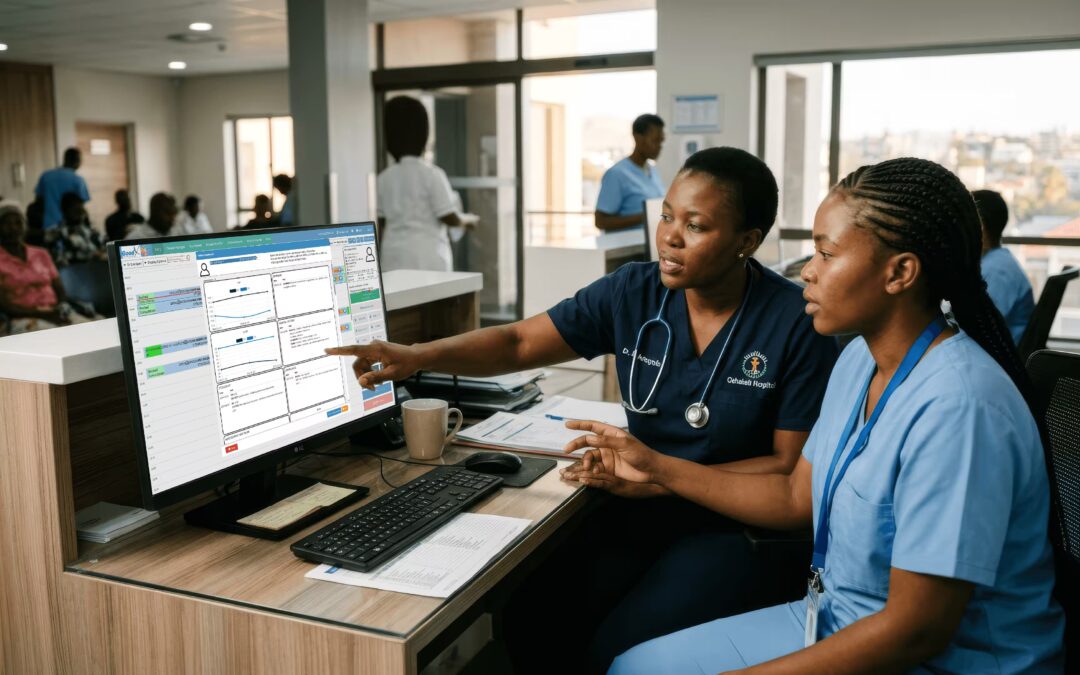
Your receptionist opens the appointment schedule and sees the full day’s bookings. For each patient, the system has already pulled their demographic information, medical aid details, and last visit summary. When the patient arrives, they are checked in with a single click.
During the Consultation
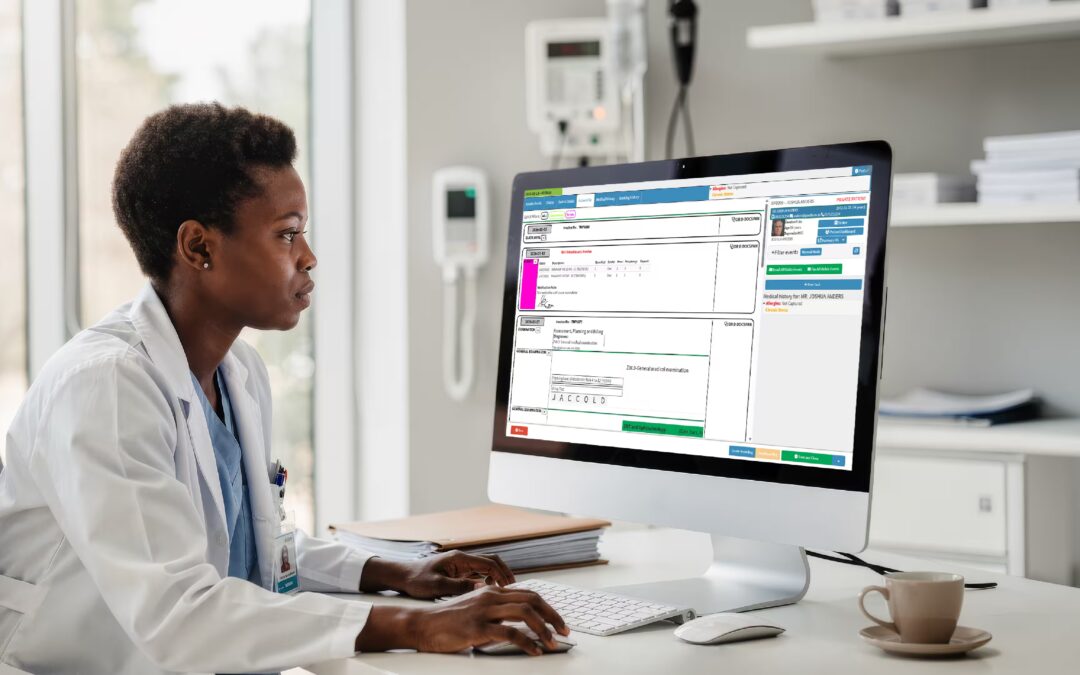
You open the patient’s file and see their complete clinical history, including previous diagnoses, medications, allergies, and any referral correspondence. You add your consultation notes directly in the system. As you type the diagnosis, the EMR suggests the relevant ICD-10 code for billing purposes, which eliminates the need for a separate coding step later.
After the Consultation
The billing module automatically generates a claim based on the codes captured during the consultation. The claim is submitted to the medical aid scheme directly from the system. A follow-up appointment is booked and a reminder is sent to the patient. From a billing perspective, the process that once took multiple manual steps now happens in a fraction of the time.
This is the practical reality of a medical software EMR system in daily use. It is not a back-office tool; it sits at the heart of every patient interaction.
Is it Hard to Learn EMR Systems?
This question comes up in almost every conversation about switching to digital records, and it is a fair one. Your team’s time is valuable, and disrupting daily operations during a transition is a real concern. The short answer is that modern EMR systems are genuinely more accessible than older platforms, but the experience still depends heavily on the quality of the system and the support provided during onboarding.
System Design Matters
A well-designed EMR system follows the natural flow of clinical work. You should be able to open a patient file, view their history, add a consultation note, and generate a claim without navigating through multiple disconnected screens. GoodX is designed with this in mind, which means the system reinforces existing habits rather than requiring staff to learn an entirely new way of thinking about their work.
Onboarding and Training
Even with an intuitive system, structured training makes the transition smoother. GoodX provides onboarding support and training resources that allow clinical and administrative staff to get comfortable at their own pace. Most practices find that reception staff are confident within the first week and that clinical staff feel at ease within two to three weeks of regular use.
What About the AI Question?
There is a growing conversation in healthcare about whether AI is replacing medical coders and administrative roles. In practice, the current role of AI in medical software EMR systems is to assist rather than replace. Features like automated code suggestions, duplicate claim detection, and anomaly flagging in billing all use AI to support trained staff in doing their jobs more accurately and efficiently. As the South African Medical Research Council and international bodies have noted, the consensus is that AI augments clinical and administrative workflows rather than replacing the people who manage them.
For Namibian practices, the more relevant question is whether your current system, whether paper or digital, is giving your team the tools they need to work effectively. An EMR system that reduces errors and speeds up billing is a concrete benefit you can see immediately.
Frequently Asked Questions
What is EMR in medical practice?
EMR stands for Electronic Medical Record. It is a digital system that captures, stores, and manages patient clinical information within a medical practice. A medical software EMR integrates clinical notes, diagnosis coding, billing, and appointment scheduling into a single platform, replacing the need for separate paper files and manual processes.
What is a practical EMR example for Namibian practices?
GoodX is a widely used medical software EMR in Namibia and across the region. It allows a GP to view a patient’s full clinical history, enter consultation notes, assign ICD-10 codes, and generate a medical aid claim, all from a single system. This reduces double-handling of information and speeds up the billing process significantly.
Is it hard to learn an EMR system for the first time?
Modern EMR systems like GoodX are designed to follow natural clinical workflows, which makes them more intuitive than older platforms. Most reception staff are comfortable within a week of onboarding, and clinical staff typically feel proficient within two to three weeks. Structured training and ongoing support from the software provider make the transition manageable.
Will AI eventually replace medical coders?
Current AI in medical software EMR systems assists with tasks like code suggestions and billing anomaly detection. It does not replace the contextual judgment of trained medical coders or administrative staff. The consensus among health sector researchers is that AI augments these roles rather than replacing them, and human oversight remains essential for accuracy and compliance.
What should a Namibian practice look for in an EMR system?
Look for a system that integrates clinical notes, ICD-10 coded billing, medical aid claims, and appointment scheduling in one platform. It should support secure data storage and access control in line with Namibian health data requirements. Good onboarding support and local knowledge of the Namibian health environment are also important factors to consider.
See How GoodX Works for Namibian Practices
Making the move to a medical software EMR system is one of the most impactful decisions a Namibian practice can make. GoodX is purpose-built for the African healthcare environment, with features that address the specific needs of practices like yours. Book a free demo and explore what a modern EMR system can do for your team.