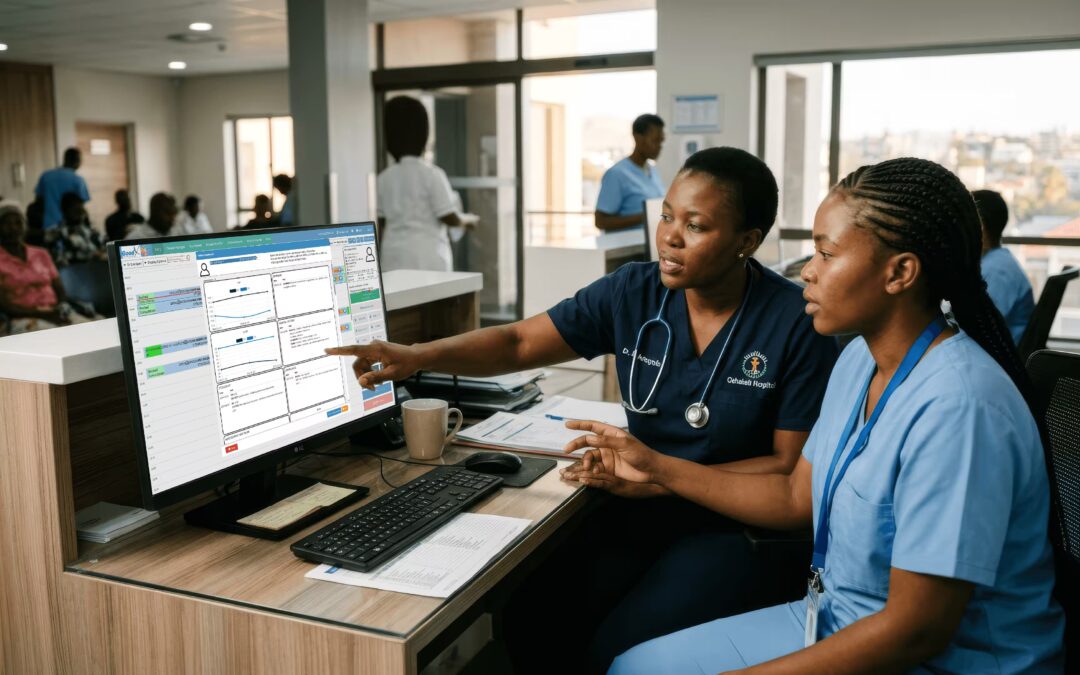
Namibia’s private healthcare sector is growing steadily, with an increasing number of general practitioners, specialists, and private clinics serving the country’s urban and peri-urban populations. As this sector grows, so does the administrative complexity of running a medical practice. Billing for multiple medical aid schemes, maintaining patient records to an acceptable standard, managing appointments efficiently, and keeping on top of financial reporting all require more than spreadsheets and paper files. The best medical practice management software makes all of this manageable, and this guide helps Namibian healthcare providers understand what to look for.
Medical Practice Management Software Namibia: Local Needs, Smart Solutions
Understanding Namibia’s Healthcare Billing Environment
Namibia’s private medical aid environment includes several major medical aid funds serving the population. PSEMAS (Public Servants Medical Aid Scheme), NHP (Namibia Health Plan), Alexander Forbes Health, and Namibia Health Plan represent a significant portion of insured patients seeking care at private practices. Each scheme has its own claims requirements, payment timelines, and billing codes that practices must navigate.
The complexity of billing multiple funders is a real operational challenge. Healthcare providers submit claims using Namibia Medical Care tariffs as the pricing framework, and claims must include accurate ICD-10 coding to support medical necessity and ensure rapid processing. A practice treating patients across multiple schemes must manage different pre-authorisation requirements, claim submission formats, and payment terms for each one. Without proper systems in place, this becomes error-prone and time-consuming.
Good practice management software for Namibia needs deep local billing knowledge built in. The software should understand the tariff structures, the major medical aid schemes, pre-authorisation workflows, and the claims submission processes specific to the Namibian healthcare environment. This local knowledge is what transforms a generic billing tool into a practice management solution that actually works for Namibian providers. Learn more about Namibia’s healthcare framework at the Namibia Ministry of Health and Social Services.
Digital Health in Namibia
Many Namibian private practices are at an early to mid stage of digital adoption. Some are still operating with manual patient records, paper appointment books, and spreadsheet-based billing. Others have moved to semi-digital systems with scattered tools for different functions. This fragmented approach works up to a point, but it creates inefficiencies and limits the practice’s ability to scale.
Modern practice management software represents a significant operational improvement over these manual and semi-manual systems. Moving to a single integrated platform eliminates duplicate data entry, reduces human error, and creates clear visibility of everything happening in the practice at any given moment. The transition from paper to digital is also an opportunity to standardise workflows and build better habits across the team.
The World Health Organization digital health framework emphasises the importance of healthcare-specific digital tools in improving quality and efficiency. For Namibian practices, adopting fit-for-purpose practice management software is a direct way to align with this framework and improve operational performance.
Healthcare Software That Understands Namibia
The right software is configured for Namibia’s specific healthcare environment. This means having local tariff codes built in, integrations with the major medical aid schemes, and an understanding of how Namibian practices actually work. It also means having support teams in the region who understand local healthcare operations and can provide training and troubleshooting in a way that makes sense for Namibian practices.
When a practice transitions from manual systems to digital practice management, the vendor’s training and support becomes critical to success. Good vendors provide implementation support, staff training, and accessible ongoing support to help practices move smoothly through the transition. This reduces the learning curve and helps practices realise the benefits of their new system faster.
Best Practice Billing: How the Right Software Improves Revenue
Why Billing Accuracy Matters
Billing accuracy directly impacts practice revenue. When claims are submitted with incorrect codes, incomplete information, or missing pre-authorisations, they get rejected by medical aid schemes. Rejected claims waste time, delay payment to the practice, and tie up staff in rework and follow-up.
Manual billing increases the risk of both under-billing and over-billing. Under-billing means the practice leaves money on the table by charging less than the tariff allows. Over-billing creates compliance risk and damages the relationship with medical aid schemes. Accurate billing means charging the right amount for the right service based on the right codes, consistently.
Accurate billing also protects the practice from audits and compliance issues. Medical aid schemes audit practices to identify billing patterns that don’t match clinical reality. When a practice uses good practice management software with built-in accuracy controls, billing aligns with clinical documentation and audits typically proceed without issues.
Medical Aid Scheme Claims in Namibian Practices
The claims process for Namibian medical aid schemes involves several key steps. Some procedures require pre-authorisation from the scheme before the practice can proceed with treatment. Claims must be submitted within specified timelines to avoid payment delays. Some schemes still accept manual claim forms, while others prefer electronic submission, and practices need to manage both.
Tracking outstanding claims and following up on rejected ones is another significant administrative task. Without a system to manage this, claims can slip through cracks, payment gets delayed, and practices lose visibility of what’s actually owed to them. All-in-one practice software handles this workflow automatically by tracking claim status, flagging rejections, and creating visibility of the entire revenue cycle.
All-in-One Practice Software for Financial Management
The value of all-in-one practice software comes from integrating billing with clinical records, appointments, and financial reporting. When these functions are separate, data has to be entered multiple times, creating work and increasing the chance of errors. When they’re integrated, information flows through the system once, at the point of care.
This integration improves billing accuracy because ICD-10 coding happens at the point of clinical documentation, not later in a separate billing step. The clinician records what they did and why, the coder uses that documentation to select the right codes, and the coder’s codes automatically populate the claim. This workflow keeps the clinical and billing narrative aligned.
Practice managers also get real-time visibility of financial performance. Instead of waiting for end-of-month reports, they can see how many claims have been submitted, how many are pending, how many have been rejected, and how much money is actually owed to the practice. This visibility helps practice managers identify billing issues quickly and manage practice finances more effectively.
Best Practice EMR: Clinical Records That Work for Namibian Practitioners
What Healthcare-Specific EMR Looks Like
A genuinely healthcare-specific EMR is very different from generic document management tools or spreadsheet systems. It uses structured clinical note templates that reflect how clinicians actually work, capturing the information needed for clinical care and for billing in a logical flow. When a clinician opens a patient record, they see prompts for the information needed for that specific type of visit, not a blank screen.
Healthcare-specific EMR includes ICD-10 code integration in clinical documentation. As a clinician documents the patient’s presenting problem, assessment, and plan, the EMR can suggest relevant diagnostic codes based on what’s being documented. This means the codes that go into the billing system are accurate reflections of what actually happened in the consultation, not guesses added later by billing staff.
A proper healthcare EMR also manages prescriptions, referral letter generation, and builds a complete longitudinal patient record that follows the patient through the practice from first consultation through to discharge. This complete record becomes the clinical foundation for the practice’s care and also the foundation for accurate billing and compliance. Generic document tools cannot deliver this level of healthcare-specific functionality.
Secure Patient Records and Confidentiality
Patient data security and confidentiality are foundational principles in healthcare. Patients have the right to privacy of their medical information, and practices have a legal and ethical duty to protect that information. This extends to every member of the practice team, from clinicians to administrative staff to cleaning services.
Good practice management software includes role-based access controls that ensure each team member can only access the patient information they need for their specific role. A receptionist doesn’t need access to clinical notes. A billing staff member doesn’t need access to sensitive mental health or sexual health information. The software enforces these boundaries automatically.
The software also maintains an audit trail showing who accessed which patient records and when. This audit trail protects the practice by creating accountability and making it possible to investigate any suspicious access. Regular data backups ensure that patient records are never lost, and backup storage should be encrypted and kept separate from the main system.
Training and Support for Namibian Practices
Implementing new practice management software is a significant change for any practice team. Staff need to learn new workflows, new systems, and new ways of documenting and billing. Quality onboarding support from the software vendor is essential to make the transition successful and to help practices realise the benefits of their new system quickly.
Good vendor support for Namibian practices means having local knowledge, accessible support channels, and training resources tailored to Namibian medical aid schemes and tariffs. The Namibia Association of Medical Aid Funds (NAMAF) and other local healthcare resources can help validate the quality of support offered by a practice management software vendor.
Related Resources
Learn more about GoodX Namibia practice management by visiting our Namibia product page to see how integrated billing, clinical records, and scheduling work together to improve practice operations. Explore our detailed guide to GoodX billing features and see how our platform handles the full medical aid billing cycle from pre-authorisation through to claim submission and payment tracking. Read our blog post on how to choose the right medical aid billing software for your Namibian practice, which covers the key features and vendor qualities to evaluate as you assess options.
Frequently Asked Questions
What is the best medical practice management software in Namibia? The best medical practice management software in Namibia combines local medical aid scheme billing, ICD-10 coded clinical records, appointment scheduling, and financial reporting in a single integrated platform. Look for software with strong local support, training resources, and a billing engine that handles Namibia Medical Care tariffs and the major local medical aid funds.
What does medical practice management software for Namibia need to handle? Namibian practice management software needs to handle billing across multiple local medical aid schemes, ICD-10 coded claim submission, appointment scheduling and patient record management, and financial reporting. It should also support pre-authorisation workflows, manage outstanding claims effectively, and provide practice managers with clear visibility of revenue cycle performance and billing accuracy.
What is best practice billing for Namibian medical practices? Best practice billing in Namibian medical practices means using integrated software to automate the full billing cycle from consultation to payment, with accurate ICD-10 coding, electronic claim submission to medical aid schemes, automated rejection tracking, and clear financial reporting. This approach reduces manual errors, speeds up payment, and gives practice owners a clear view of financial health.
What is best practice EMR for Namibian healthcare providers? Best practice EMR for Namibian healthcare providers uses structured clinical templates tailored to local workflows, integrates ICD-10 coding at the point of documentation, supports prescription and referral management, and maintains a complete longitudinal patient record. The best EMR systems also include strong data security features and integrate with billing and scheduling to support the full practice workflow.
What all-in-one practice software features matter most for Namibian practices? Namibian practices benefit most from all-in-one practice software that combines appointment scheduling, clinical records, medical aid billing, and financial reporting in a single system. This eliminates double data entry, improves billing accuracy, and gives practice managers real-time visibility across clinical and financial operations. Local scheme integrations and quality local support are also essential.
Find the Right Practice Management Software with GoodX Namibia
GoodX is a proven practice management platform in Namibia, designed specifically for the operational realities of Namibian healthcare practices. Our platform supports local medical aid billing for PSEMAS, NHP, Alexander Forbes Health, and other major schemes, integrates ICD-10 coding into clinical workflows, and provides practice managers with real-time visibility of both clinical and financial operations.